|
Mass movements of material due to mudflows, debris flows and landslides
destroy the vegetation locally
and create a mosaic of new conditions:
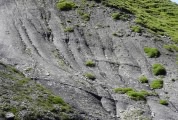
In the scar of a mudflow or landslide bare substrate is exposed, and little soil cover may be left. In
such areas vegetation development takes the form of a (primary)
succession.
In the deposition zone, the vegetation may be periodically covered over by mud and debris. On the
other hand, fragments of upslope vegetation that were carried with the mudslide may survive and expand
in the deposition zone.
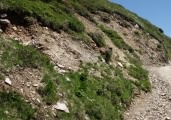
The surface of a mudflow is exposed to more severe microclimatic
conditions (wind exposure, freeze-thaw etc.) than the surrounding intact vegetation. Often there
are also differences in the
edaphic conditions between the mudflow and the undisturbed area, e.g. the soil nutrient
content may be lower in the mudflow. These conditions may prevent rapid revegetation.
|
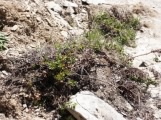
3 - Deposition of soil and vegetation fragments (119K)
|




 1
1
 2
2
 back
to top
back
to top