 |
|
|
|


 |
|
|
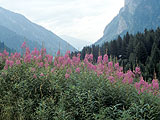
1 - Epilobium angustifolium, a characteristic "phalanx" growth form
2 - Carex firma forming girlandes
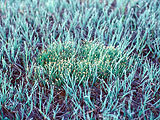
3 - Trichophorum caespitosa in a clone of Carex nigra |
Alpine plant life is characterised by a high occurrence of species that reproduce by vegetative growth. Plants are modular organisms and are constructed from repeated and similar morphological units. In principle each such unit can grow into a new plant. In clonal plants such units are called "ramets", or "tillers" in grasses. The selection pressures of alpine environments with short, cold summers, long snow cover during winter, desiccating winds and low fertility soils have resulted in a high frequency of long-lived clonal plants in alpine floras. Growth form and demographic properties of such species largely result from the specific characteristics of their vegetative propagation creating a diversity of strategies. The dominance of clonal plants is particularly pronounced in very hostile situations such as open screes and low-fertility soils or in late successional communities such as alpine grasslands. It is thought that clonal plants rely more on vegetative growth than on reproduction by seeds for local population persistence. There is indeed plenty of evidence that clonal plants rely little on seedling recruitment for population growth despite regular and sometimes even abundant seed production. This is particularly true for clonal species in alpine habitats. Nevertheless, clonal plants show high levels of genetic diversity and have a high number of different genotypes within established populations. Thus, at least episodically reproduction from seeds must play a role. Establishment from seeds may be restricted to the initial colonisation of a site or to rare occasions at "windows of opportunity". Simulation models have shown that in long-lived plants even very rare establishment from seeds is sufficient to maintain genetic diversity. |
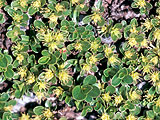
4 - Salix herbaceae, a clonal "tree" with below ground stem
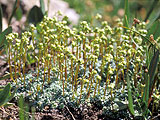
5 - Saxifraga caesia |

 back
to top back
to top |
29 August 2011 |
||
| |
||