
Background
Hypothesis and target group
Organic farming is an important factor in our food supply. It provides the population with healthy and non-fertilized fresh produce from ecological and sustainable agriculture. This is why our project analyses the evolution of organic agriculture in Switzerland between the years 2000 to 2022. We would like to understand the development of the number of organic farms in relation the average size of farms in Switzerland. Therefore, our hypothesis is as follows: "How did the share and total amount of organic production change regarding the average size per farm (2000-2022)?”
The target group of this project primarily includes Swiss agriculture experts and politicians. In the Findings section the Policy Recommendations can be found. The goal of this project is to analyse the development of Swiss (organic) agriculture and as a result make recommendations on how the future agriculture should be guided to align with the following Sustainable Development Goals of the 2030 Agenda:
2 End hunger, achieve food security and improved nutrition and promote sustainable agriculture. First and foremost, the aim of SDG 2 is to enable access to food for everyone in every season of the year. The Zero Hunger Challenge of SDG 2 furthermore calls for all agriculture and food systems to be sustainable and recognizes the importance of supporting small farmers with their productivity and income.12 Ensure sustainable consumption and production patterns. SDG nr. 12 aims to secure sustainable food consumption and production. The SDG 12 calls for all countries to promote sustainable agri-food systems and support for regional and national initiatives. Furthermore, the SGD requests a change of unsustainable patterns and instead to promote sustainable consumption and production to promote social and economic development within the carrying capacity of the ecosystems.
15 Protect, restore and promote sustainable use of terrestrial ecosystems, sustainably manage forests, combat desertification, and halt and reverse land degradation and halt biodiversity loss. The SDG nr. 15 focuses on restoring and maintaining ecosystems and biodiversity, which are an essential foundation for sustainable development. The SDG advocates the target of reaching a significant reduction of biodiversity loss at a global, national, and regional level.
In conclusion, Swiss agriculture needs to be guided to meet the following goals: sustainable agriculture and support of small farmers, sustainable consumption and production patterns, sustainable use of terrestrial ecosystems and halt biodiversity loss.
Main agricultural use
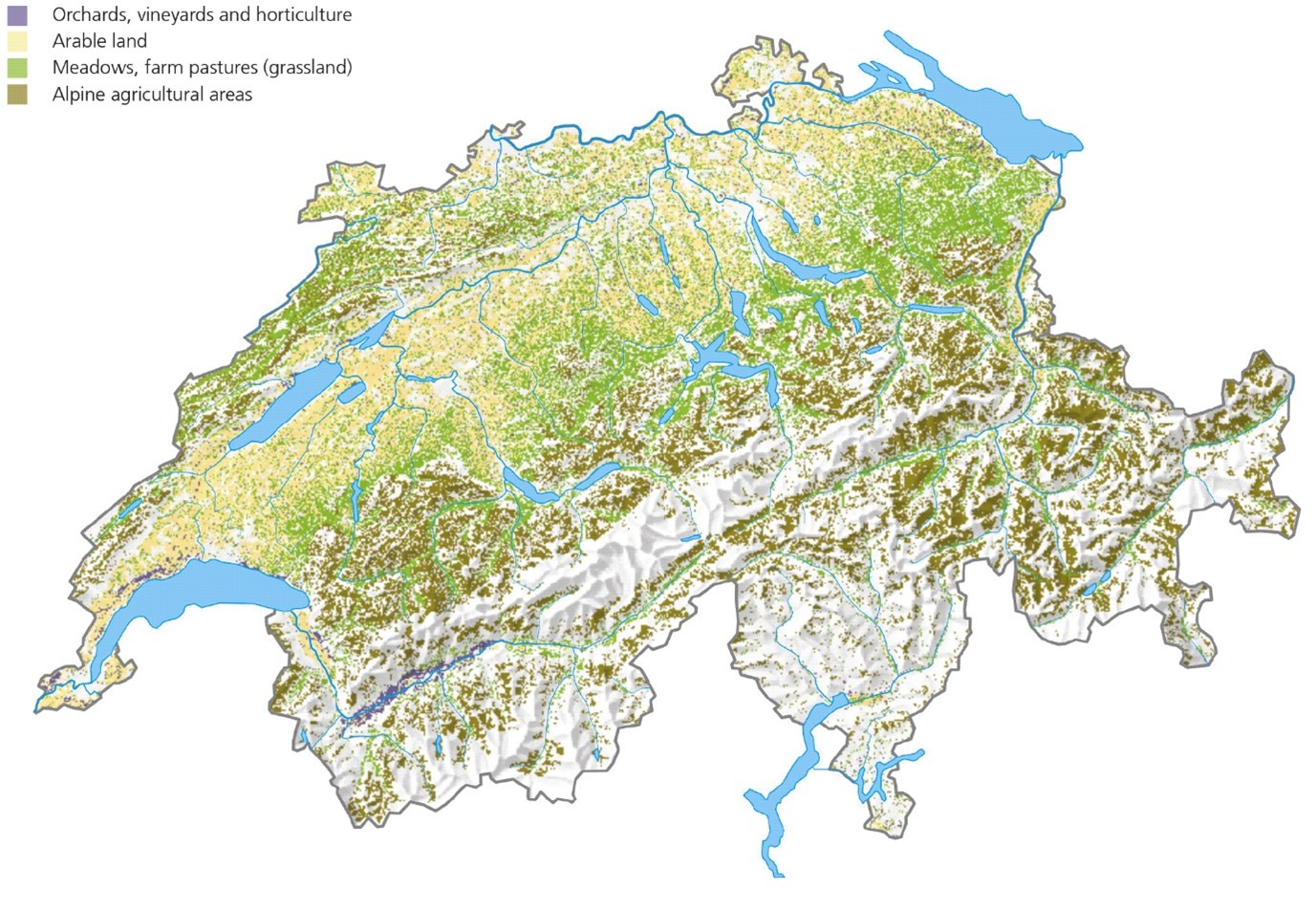
Image 1: Main forms of agricultural land use, Source: Vogelwarte (n.d.)
The image above displays the distribution of the main agricultural uses in Switzerland and helps to understand the uses of agriculture in the different geographical topographies of the country. In the lowlands in the north-western part of the country, there is mostly arable land, meadows and farm pastures. In the pre-alpine and lower alpine areas in the south-eastern part of the country, there are predominantly orchards, vineyards or alpine agricultural uses.
Sustainability in today’s food regime
In Switzerland, farms with organic production act according to the government’s organic farming regulations. You can directly read up on the regulations on organic farming by clicking here In organic agriculture, the farmers combine agroecological practices with productivity. This means that direct control of fertilisers and pesticides, herbicides, synthetic soluble fertilisers and veterinary medicines are banned or restricted. In the practice of organic farming, the aim is to maximise the stability and diversity of agroecosystems. This concludes with soil fertility and organic matter, which provides the basis for a sustainable and healthy food supply (Niggli, 2015). According to a study conducted by Niggli (2015) organic farming in Switzerland has 30 per cent more species diversity and 50 per cent greater flora and fauna than conventional farming. As chemical fertilisers, synthetic herbicides and pesticides are not used in organic farming the increase in soil fertility and efficiency is notably different from conventional activity. Soils on organically managed farms show a higher organic matter content, higher biomass, higher enzyme activities of micro-organisms, improved water infiltration and retention capacities and less prone to water and wind erosion (Niggli, 2015).
Regulations for Organic Farming
In Switzerland orcanic farming is of high significance and therefore gets regulated as well as supported by the Swiss Confederation. The 'Organic Farming Ordinance' defines how agricultural products labelled as orcanic must be produced. The production, processing, storage, marketing, import and export is defined. For the plant production the following points are regulated:
- Fertility and biological activity of the soil
- Plant protection
- Fertilisation
- Seeds, plants and plant propagating material
- Collection of wild plants
- Requirements for livestock farming
- Principles of livestock feeding
The aim of these strict rules are the protection of the environment and resources. To be an organic farm the organic farming methods must be used over the whole organic holding.
Map Design
Visual Variables
Color: The colors chosen are contrasting to enhance readability for the user. The visual
distinction between the two layers is better with contrasting colors. Additionally, the brown-orange background
is often associated with land and soil, fitting the data perfectly. The color palette has been ensured to be
colorblind-safe.
Size: A time slider is integrated into the map, allowing observers to
notice
changes in the data over time. The visual variable size is best suited to show changes over time, as changes in
size are depicted most effectively (accurately) and efficiently (quickly). On the third place of change
detection is the visual variable color hue (Garlandini, S. and Fabrikant, S.I. (2009)). In the map, the area per
farm is shown with color hue, and the total number of farms is displayed with the size of the pie charts.
Location: The pie charts are located in the center of the respective canton they
represent.
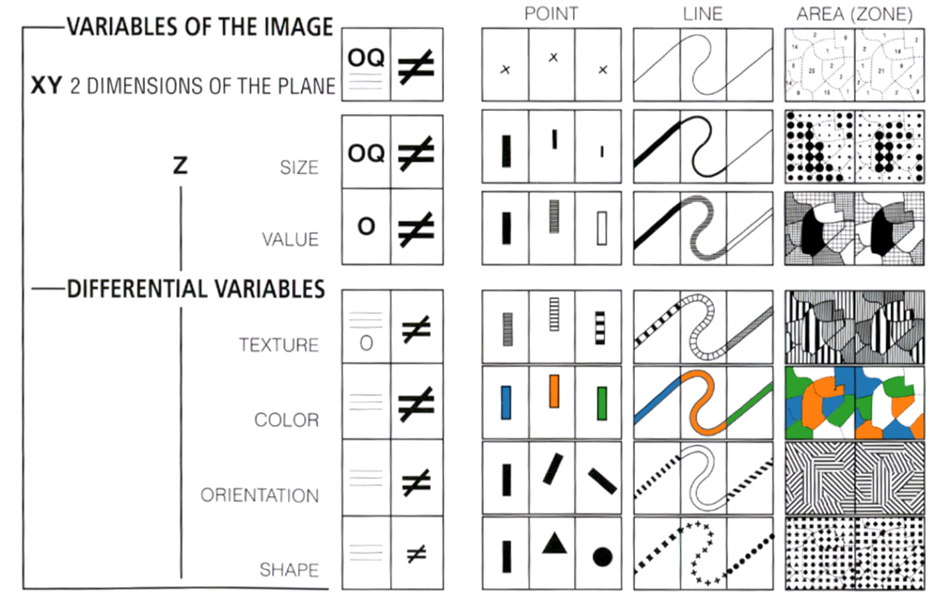
Image 2: Semiology of Graphics, Source: Bertin (1983)
Interactive Elements
- Time Slider: The time slider enables users to observe changes in the shown features over time. It can run automatically to analyze the change of area per farm and the number/share of (organic) farms from 2000 to 2022. Users can also jump to a specific year. When the time animation is played, the speed is set to the fastest for optimal observation of changes.
- Swiper: The swiper allows comparing two layers. In this project, the swiper shows the increase in organic farms versus the increase in the area per farm from 2000 to 2022. Adding an additional layer to show the combined increase of both organic farms and area per farm was discussed but not implemented due to limitations in comparing more than two layers and issues with legend classification.
Map details
- Projection: As the study area is limited to Switzerland, the local reference system LV95 has been chosen.
- Legend Scale: The two legends in the map with the swiper do not have the same value range.
- Classification Method: The classification of the data remains constant over the entire timespan (time slider map). All data from the 23 years was included for the classification definition. Since there are no outliers or features with widely different values in the data, the 'Quantile' classification was used. This method divides the data into classes with an equal number of features, allowing users to visually rank the data.
Limitations
A map is never truly finished; there is always room for improvement. Esri's Experience Builder is excellent for creating WebMaps, but it offers limited creative freedom. For example, the zoom-out functionality could not be limited, which can lead to users getting lost. However, clicking the home button returns them to the initial view .Additionally, we attempted to style the circles in the legend differently but found that the legend customization options were limited. Additionally, the styling options for pop-ups are restrictive.Motivation
The reason we chose that topic is because we feel like it is a current topic with the increasing popularity of organic products. Additionally, the broad public is confronted with the choice of organic versus conventional food while shopping and through advertisements. With present challenges like climate change and biodiversity loss it is important to think about local sustainability.