
Background
In 2023, the Swiss hotel industry set a new record in the tourism sector with 41.8 million overnight stays. According to the Swiss Tourism Federation (STV, 2022), especially the demand from foreign guests increased by 21.8% to 20.9 million overnight stays. Mountains, lakes, forests and clean air are the trump cards that Switzerland uses to attract tourists all year round (EDA, 2023). The tourism industry is deeply rooted in Swiss society and is a key economic factor in mountain regions, with an average of 25 million guests and 55 million overnight stays per year (EDA, 2023). In 2021, tourism contributed around 3% to the gross domestic product (GDP), which corresponds to a total of almost 17 billion Swiss francs (BFS, 2023). Tourism therefore makes a significant contribution to value creation in Switzerland and creates jobs at the same time. Converted into full-time jobs, the tourism industry employs more than 170’000 people, even though many employees in this sector work part-time and often seasonally (EDA, 2023).
Given the importance of tourism to Switzerland’s economy and its alignment with the sustainable development goals (see below), we think that it is important to address this theme with our project. Therefore, our project focuses on the following research question.
Research Question
Where did the tourists who stayed overnight in Switzerland between 2014 and 2023 come from?
Motivation
The aim of this project, which was created in the context of the master’s course GEO454 Geovisualization at the University of Zurich, is
thus to create an interactive map display about tourism in Switzerland. The objective of our interactive map is twofold: firstly, to provide an answer to our research question; secondly, to enable users to interactively explore the importance of Switzerland as a travel destination.
The goal of this research is to enable individuals who explore our map to comprehend the interdependencies and connections of Switzerland as a travel destination. Given the pivotal role that tourism plays for the Swiss economy, it is imperative that this topic be addressed in our research. The map can facilitate an enhanced comprehension of the interconnections and interdependencies between Switzerland as a travel destination and the global context. The map display can be of use to tourism businesses, such as hotels or hostels, as well as transport companies and those involved in the planning of transport infrastructure with a view to developing sustainable cities. Our project about tourism in Switzerland therefore can ensure long-term economic growth, environmental conservation, and the well-being of local communities.
Sustainable Development Goals
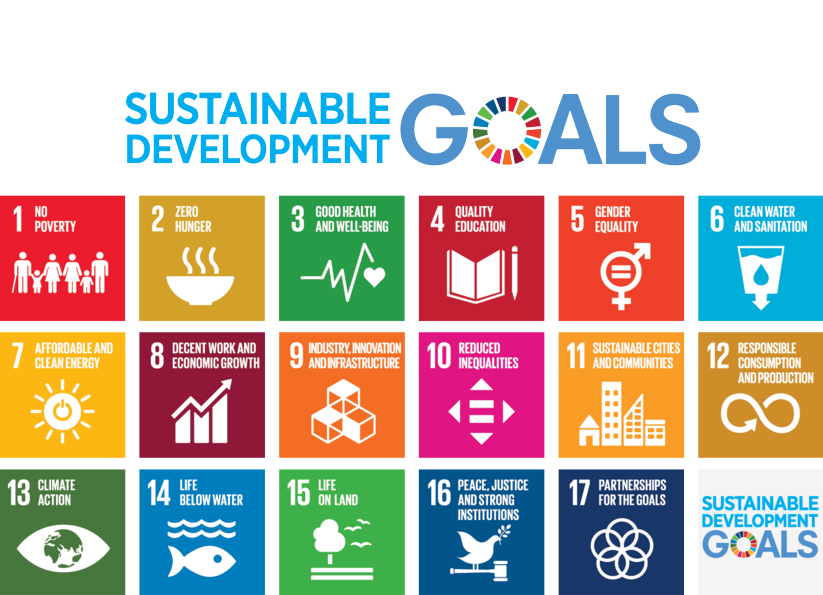
The 17 Sustainable Development Goals (SDGs) were adopted in September 2015 and are common, universal goals for the member states of the United Nations that are intended to transform the world into a fairer, more prosperous and more peaceful society by 2030 (UNDP, 2022).
With our research question we address the following SDGs:

The aims of Goal 8 of the SDGs is to promote sustained, inclusive, and sustainable economic growth, full and productive employment, and decent work for all. In order to achieve this goal, it is necessary to investigate the role of tourism as a significant contributor to Switzerland's GDP. Furthermore, the tourism industry in Switzerland creates a considerable number of jobs, employing over 170,000 people in full-time equivalents. By attracting a diverse range of international visitors, the economic growth becomes inclusive and generates benefits for local businesses. Sustainable tourism can therefore provide economic growth and employment opportunities while promoting environmental conservation. By concentrating on sustainable practices, the tourism sector can ensure long-term benefits for both the economy and the environment, in alignment with the broader objectives of SDG 8.

Goal 9 aims to build resilient infrastructure, promote inclusive industrialization and foster innovation. Tourism plays an important role in this by driving infrastructure development and innovation in Switzerland. Understanding the origins of tourists informs infrastructure investments, optimizes the travel experience and reduces environmental impacts. Tourism also promotes sustainable industrial practices, such as environmentally friendly accommodation. By focusing on sustainable infrastructure and innovation, the tourism sector contributes to long-term economic growth while minimizing environmental damage, in line with the objectives of SDG 9.
Goal 11 aims to create inclusive, safe, resilient and sustainable cities and communities. Tourism plays a key role in achieving this goal by influencing urban development and community well-being. Understanding the origins of tourism helps cities plan for sustainable growth, manage visitor numbers and preserve cultural and natural heritage. By promoting sustainable tourism practices, cities can ensure that tourism benefits local communities while protecting the environment. Sustainable tourism contributes to the creation of vibrant, liveable and sustainable cities, in line with the goals of SDG 11.

Goal 12 aims to ensure sustainable consumption and production patterns. Tourism, particularly in Switzerland, is a key contributor to this goal by promoting responsible consumption and production practices. By understanding where tourists come from, tourism services can be tailored to encourage sustainable behavior, such as minimizing waste and supporting local products. By promoting sustainable tourism initiatives, Switzerland can reduce its environmental footprint while generating economic benefits. Sustainable tourism promotes responsible consumption and production, in keeping with the goals of SDG 12.