Obsgession
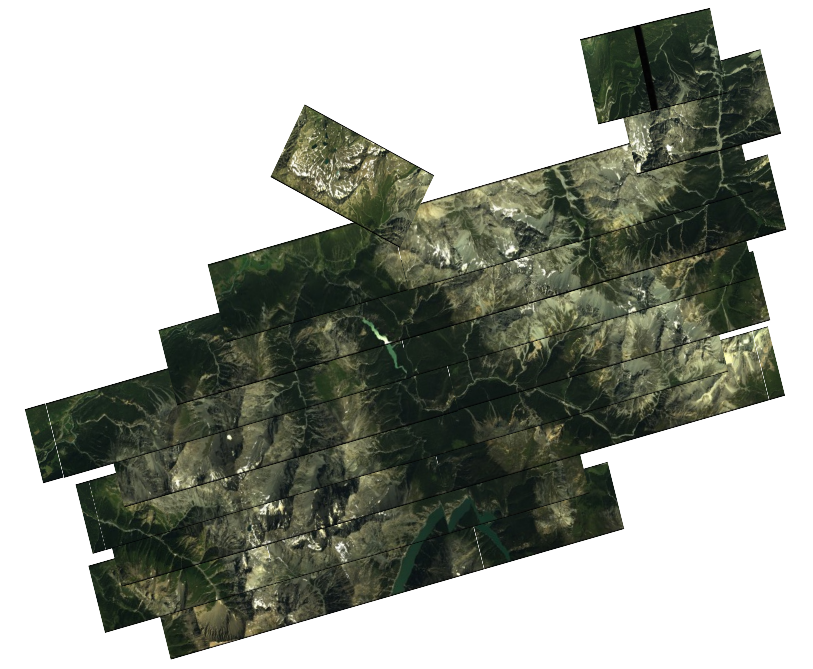
The OBSGESSION project aims to advance our understanding of freshwater and terrestrial biodiversity dynamics and their underlying drivers. Within the ESS group at UZH, we mainly focus on the insufficient characterization of uncertainty in biodiversity data products derived from remote sensing across multiple processing levels. A central challenge is not only to quantify uncertainty but to disentangle and attribute its sources, that is, identifying individual contributors and their relative influence on overall uncertainty budgets. Integrating this uncertainty information with biodiversity products will deepen ecosystem understanding and support more informed conservation planning.Our methods are primarily developed using AVIRIS-4 imaging spectroscopy data, though the framework is designed to generalize other sensors. To develop and validate remote-sensing-derived biodiversity products alongside our deep-learning-based and traditional machine learning approaches for uncertainty propagation and estimation, we collected field data from grassland and forest sites in the Swiss National Park (shown in Figure 1), the French Alps, and a temperate forest ecosystem near Zurich. Our in-situ dataset combines leaf and canopy spectroscopy with lab-derived plant functional traits.